Gallery · Blackbeard · Room 7 of 7
Fourteen Wives and No Trial
Curator's note
This room leads on an absence, and it is the only room in the Collection that does. The closing exhibit is what the archive cannot produce, because for a man this famous that is the most surprising thing about him.
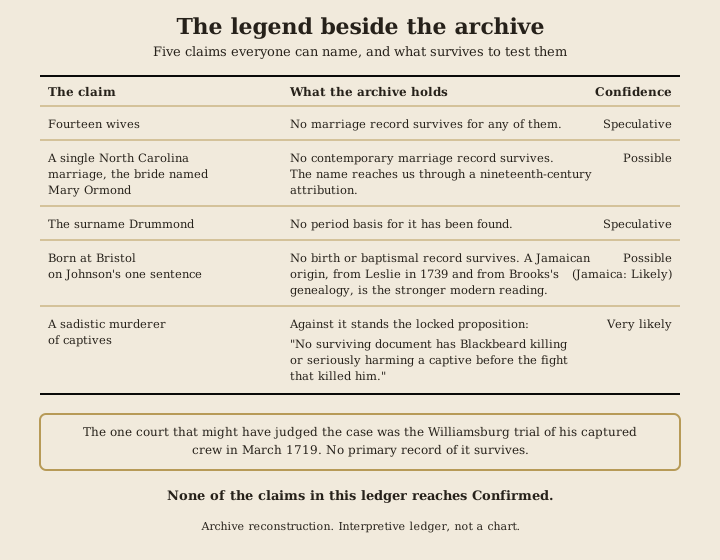
Charles Johnson's book of 1724 gives him fourteen wives, the last of them a girl of sixteen in North Carolina. No marriage record survives for any of them. The bride's name, Mary Ormond, is a nineteenth-century attribution rather than a contemporary record. The surname Drummond, which appears in a good deal of later writing, is in no document of the period.
The same book gives him Bristol, in one sentence, and it is the only source that does. No birth or baptismal record survives. The Jamaican reading, from Leslie in 1739 and from Baylus Brooks's genealogical work since, is the stronger of the two.
Then there is the atrocity, which is what most people mean when they say the name. No surviving document has Blackbeard killing or seriously harming a captive before the fight that killed him. The stories of shooting his own quartermaster under the table, of the burning brimstone below decks, of the severed finger and the ring, all arrive with Johnson, six years after the death, and he is their only source.
The absence that governs everything else is the trial. He was killed at Ocracoke and his head was carried back to Virginia, and the case against him was never opened in a court. His captured crew were tried at Williamsburg in March 1719, and no primary record of that proceeding survives either. The most famous pirate who ever lived is also one of the least judicially examined.
Where this Archive has got something wrong, it is listed and dated on the corrections page. The entrance to this Collection, with the book that made the legend, is at Blackbeard.