Gallery · Captain Kidd · Room 9 of 9
Execution Dock and After
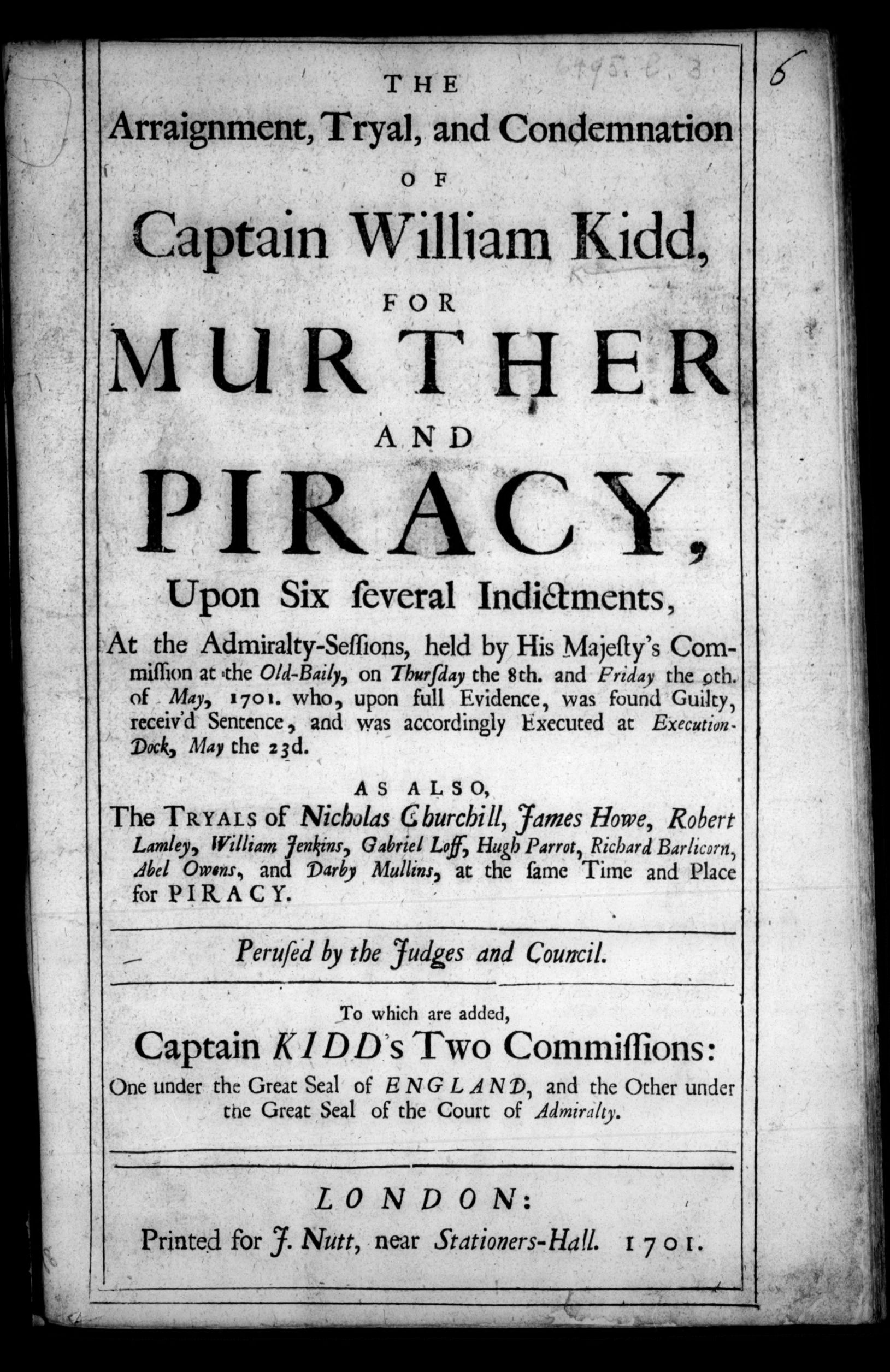
Kidd died at Execution Dock on 23 May 1701. The man ended there. The name did not.
Later accounts agree that the first rope broke and he was hanged a second time, then that his tarred body was hung in a gibbet cage at Tilbury Point on the Thames as a warning to other seamen. Both details are reported consistently, but neither appears in the printed 1701 trial pamphlet, so Sailing the Black Flag: The Archives carries them as highly probable rather than confirmed, and does not fix the display at a single number of years.
Almost everything the world now attaches to Captain Kidd arrived after the rope: the buried treasure, the maps, the sea-chest, three centuries of fiction built on a voyage that struggled to pay its investors. The legend is a subject in its own right, and the Archives treats it as one, provided it is never confused with the record.
The record version is stranger and better. A licensed privateer, financed close to power, failed at sea, abandoned by his crew, convicted of a murder that witnesses described and of piracies his missing paperwork might have complicated, hanged in the same month his trial opened. The questions his case raises about authority, evidence and political convenience are not seventeenth-century questions. That is why he gets the Archives' first Collection.
That is the end of the route. The synthesis on the entrance page gathers what the nine rooms establish, or step off the route into the records themselves: the man, the ships, the trial, the papers.