Gallery · Collection · COL-001
Captain Kidd
How did a royal privateer become a politically useful pirate?
How a privateer became a pirate, how the pirates became a war, and how the war ended the age. This Collection carries the first act.
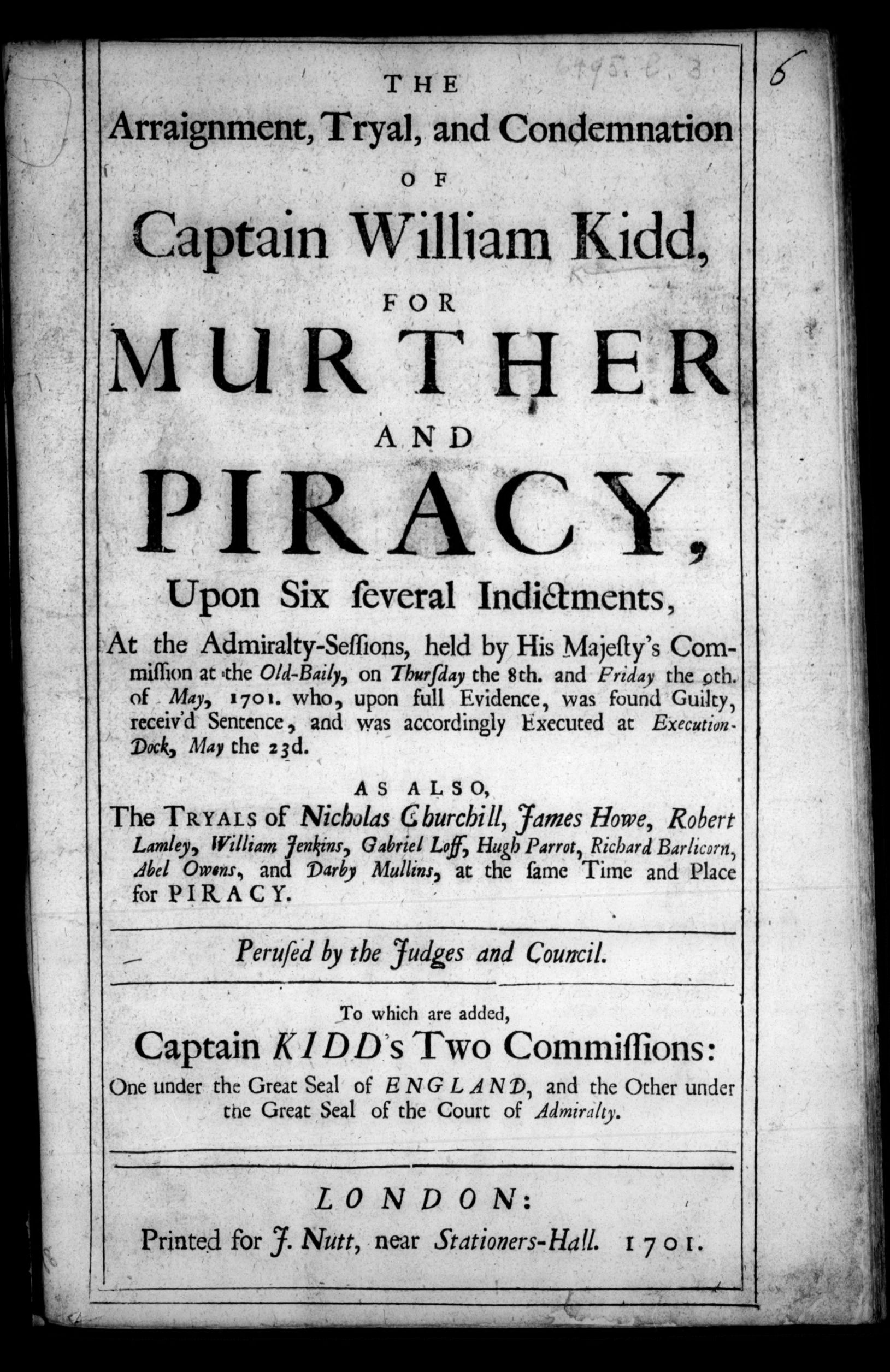
At William Kidd's trial for piracy in May 1701, the documents that could have carried his defence were not in the courtroom. The French passes, protection papers taken from his most valuable prize, existed. The government had them. The jury never saw them. Kidd hanged that same month.
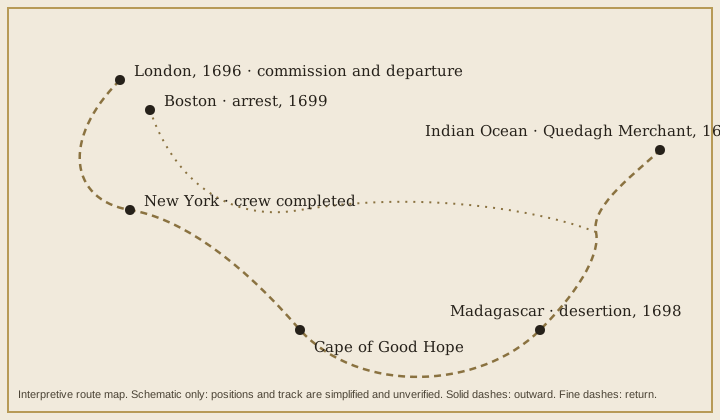
If you start with those absent papers, the familiar story changes shape. Kidd did not begin as a pirate. He began as a licensed privateer with a commission to hunt pirates and authority against French shipping, backed by investors close to power. The voyage failed slowly and then disastrously: a dead gunner, a deserting crew, one rich capture whose legality turned entirely on paperwork. By the time he returned, the men who had financed him needed distance from him more than they needed his defence.
This Collection walks that story in nine rooms, from the commission to the gallows and past it into the legend. Each room keeps its evidence in view, states its confidence and links to the underlying records for the people, ships, places and documents involved. Where the record is thin or contested, the room says so. The passes support a defence around particular captures. They do not prove total innocence, and this Collection will not pretend they do.
The rooms
-
The Commission
What Kidd was licensed to do, and by whom. -
A Ship Built for the Job
The vessel designed for the venture, and its burden. -
The Voyage Sours
Madagascar, desertion and a hunt with no lawful prey. -
The Gunner
The death that produced the murder charge. -
The Prize
The capture on which everything turned. -
The Papers
The documents at the centre of the legal question. -
The Return and the Arrest
Why Kidd sailed toward the man who arrested him. -
The Trial
Charges, evidence and what the jury never saw. -
Execution Dock and After
The end of the man and the start of the legend.
What it adds up to
Kidd was convicted of murder on eyewitness testimony and of piracy on captures his commission arguably covered, without the documents that would have tested that argument. Whether the verdict was just is a question the rooms let you answer against the evidence, act by act and paper by paper. What the story shows beyond argument is how a man can be made into whatever his moment requires: a weapon when piracy threatened trade, an embarrassment when the venture soured, and an example once an example was needed.
The record is good on what was done to Kidd. It is worse on what the men who arranged it said to each other while they did it.
Go deeper
- Person William Kidd Commissioned privateer later convicted of murder and piracy.
- Document The French Passes Documents relevant to French protection and the lawful prize argument.
Two essays argue the interpretive questions this Collection raises: Captain Kidd: Political Fall Guy and Was Captain Kidd a Pirate?