Gallery · Captain Kidd · Room 1 of 9
The Commission
Neither commission is on display here in the original: the texts survive in print, and no image of the original documents is yet exhibited anywhere in Sailing the Black Flag: The Archives. The nearest object this room can show is the title page of the printed 1701 trial record, below, which advertises "Captain Kidd's Two Commissions" among its contents.
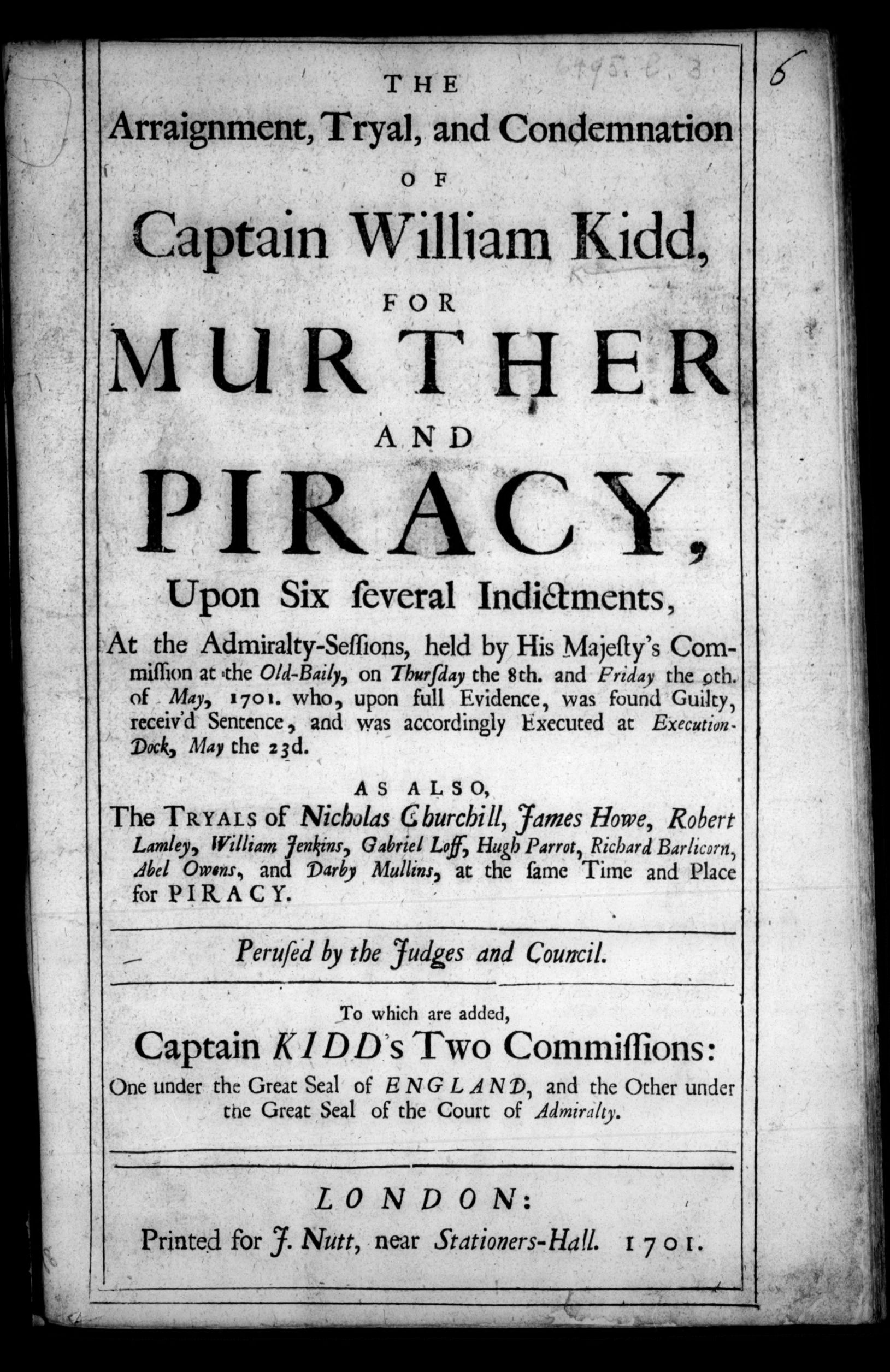
Everything in this story descends from two pieces of paper.
The first was a royal commission under the Great Seal, dated 26 January 1695/6, authorising Kidd to seize four named pirates: Thomas Tew, John Ireland, Thomas Wake and William Mace. The document names its captain "Robert Kidd". The second instrument gave him authority against French shipping, England being at war with France. Together they made him a privateer: a private captain doing licensed violence, with the paperwork that separated his trade from the crime it otherwise resembled.
Catalogue note: the date, and the name "Robert"
- The dateline Confirmed
- 26 January 1695/6 is the commission's own dating, taken on the document's authority. The original manuscript itself remains unexamined by the Archives.
- The name "Robert" Confirmed
- The Great Seal commission calls its captain Robert Kidd; that is what the document says, and the Archives records the forename as an attested alias rather than correcting it away. Every connected record, from the voyage to the gallows, concerns the same William Kidd.
The men behind the venture mattered as much as the papers. This was not a waterfront speculation. Investors close to government put money into Kidd's voyage, the Earl of Bellomont among them, expecting a return from captured pirate goods and lawful French prizes. Their names on the subscription were an asset while the venture promised profit. They became a liability the moment it promised scandal.
The thing to hold on to is the distinction the commission created, because the whole case runs on it. A capture within the licence was prize. The same capture outside it was piracy. Which side of the line Kidd's voyage fell on would be decided years later, in a courtroom, partly by which documents were on the table.