Gallery · Bartholomew Roberts and the Pirate War · Room 4 of 8
The Cruises
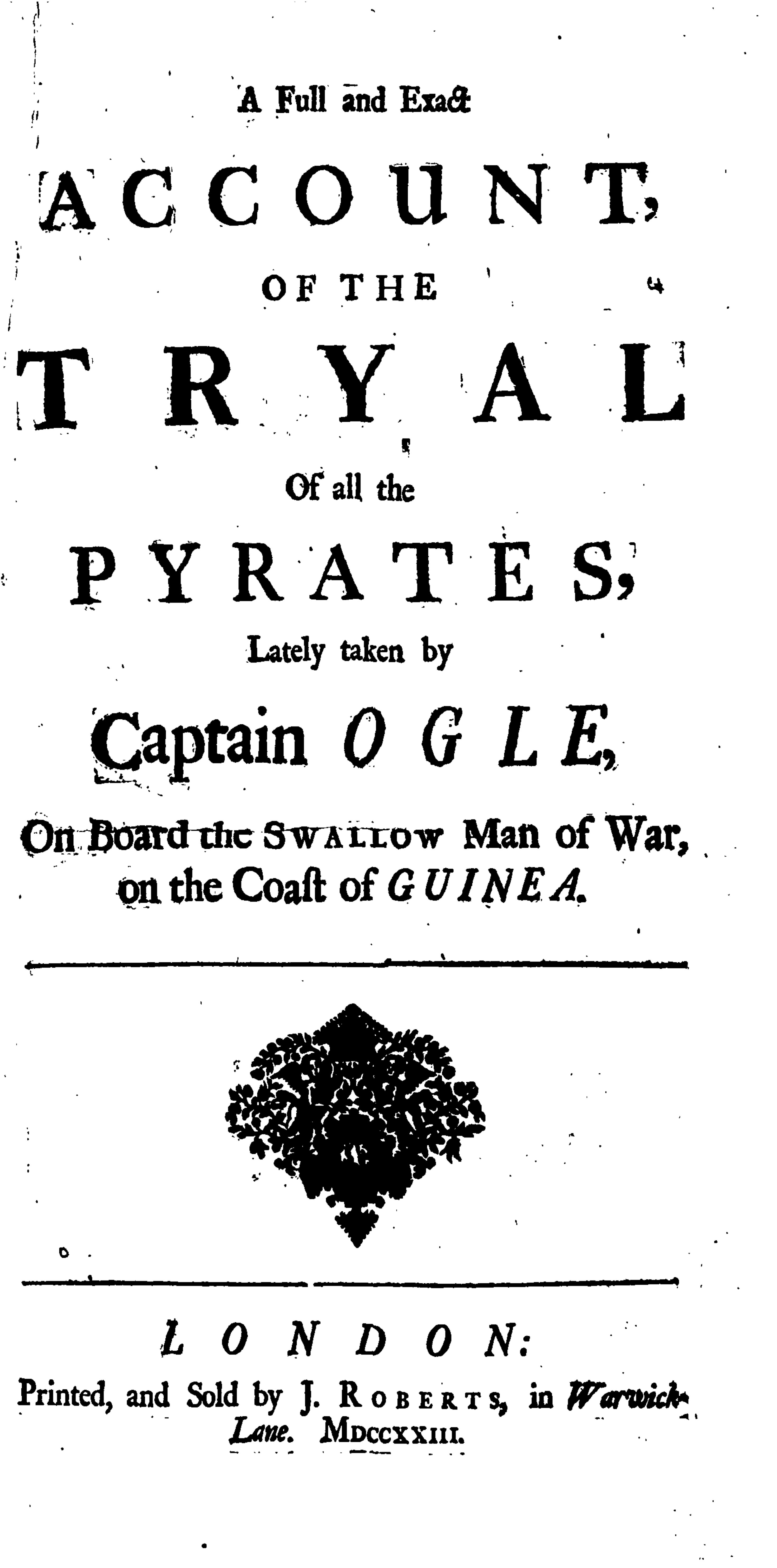
This is the room where Sailing the Black Flag: The Archives has to be most careful, because it is the room the legend loves most.
The reputation was made across three seas in under three years. Off Bahia in 1719 Roberts took a rich Portuguese prize said to carry about forty thousand gold moidores and a jewelled cross. It is a good story and it may be broadly true, but the number is Johnson's and swings as high as ninety thousand in the retellings, and the ship has no name in any period source cited in this Collection. The name usually attached to it, "Sagrada Familia", is a later addition, absent from Johnson, from the trial record and from Atkins. Until a Portuguese or Brazilian record surfaces, this Collection calls it the unnamed Portuguese prize taken off Bahia and states the moidores at possible.
North to Newfoundland the following June, Roberts raided Trepassey. Johnson has him destroy twenty-two vessels there. The number is period-attested but the destruction is not: Moyse Renos's sworn deposition, calendared in the Colonial papers, records twenty-two sail found in the harbour of which the pirates took one and fitted her with eighteen guns, and the historian Olaf Janzen notes that the official 1720 fishery reports record no such losses at all. The raid happened. Its scale is disputed, and this room says so instead of choosing Johnson's larger figure.
The Caribbean cruise carries the Collection's set-piece test of confidence. A story has Roberts take a French man-of-war and hang the Governor of Martinique from a yardarm. It is tempting to cut it as legend, and it is not. A Bermuda deposition of April 1721, Lieutenant Governor Bennett's, reports the hanging independently and before Johnson ever printed it. Modern scholars still doubt the literal event, holding that no sitting governor was among those taken. So the Archives places it at possible, shows the doubt, and does not promote the story beyond what the evidence will bear. The original deposition is held at Kew as CO 37/10. That caution is deliberate, not a shrug.
Back on the Guinea coast in August 1721 came the ship that mattered. Roberts took the Royal African Company frigate Onslow and remade her as a forty-gun flagship, the last and greatest of the two vessels he called Royal Fortune. This is firmer ground: the capture and renaming sit at highly probable, and Ogle's own dispatch later described the ship he destroyed as "formerly called the Onslow", of forty guns and a hundred and fifty-two men. The Royal Fortune's page treats her as the seat of the polity, the deck on which the articles were read and the votes held.
One number often attached to Roberts should be set right here. The "over four hundred ships" so often attached to Roberts is a modern aggregate. Johnson lists many separate captures but gives no career total, and no period document tallies four hundred. That the total was very large is fair; the specific figure is not a count, and this Collection never prints it as one. The best single trace of Roberts operating in these months is small and real: a ransom receipt for the ship Hardey, dated 13 January 1721/2, signed in his own hand "Batt. Roberts". A pirate running a paper bureaucracy of ransom, three weeks before a King's ship killed him.