Gallery · Bartholomew Roberts and the Pirate War · Room 8 of 8
The Executions
Fifty-two men were hanged.
The figure is confirmed from the printed record, and the Collection states it plainly. They were hanged in batches over the first weeks of April, within the flood-marks below Cape Coast Castle, and the bodies of a number were left in chains on gibbets along the coast, tarred against the weather, set where ships passing to and from the slave factories would see them. The state was not only punishing these men. It was advertising the punishment to the trade Roberts had preyed on.
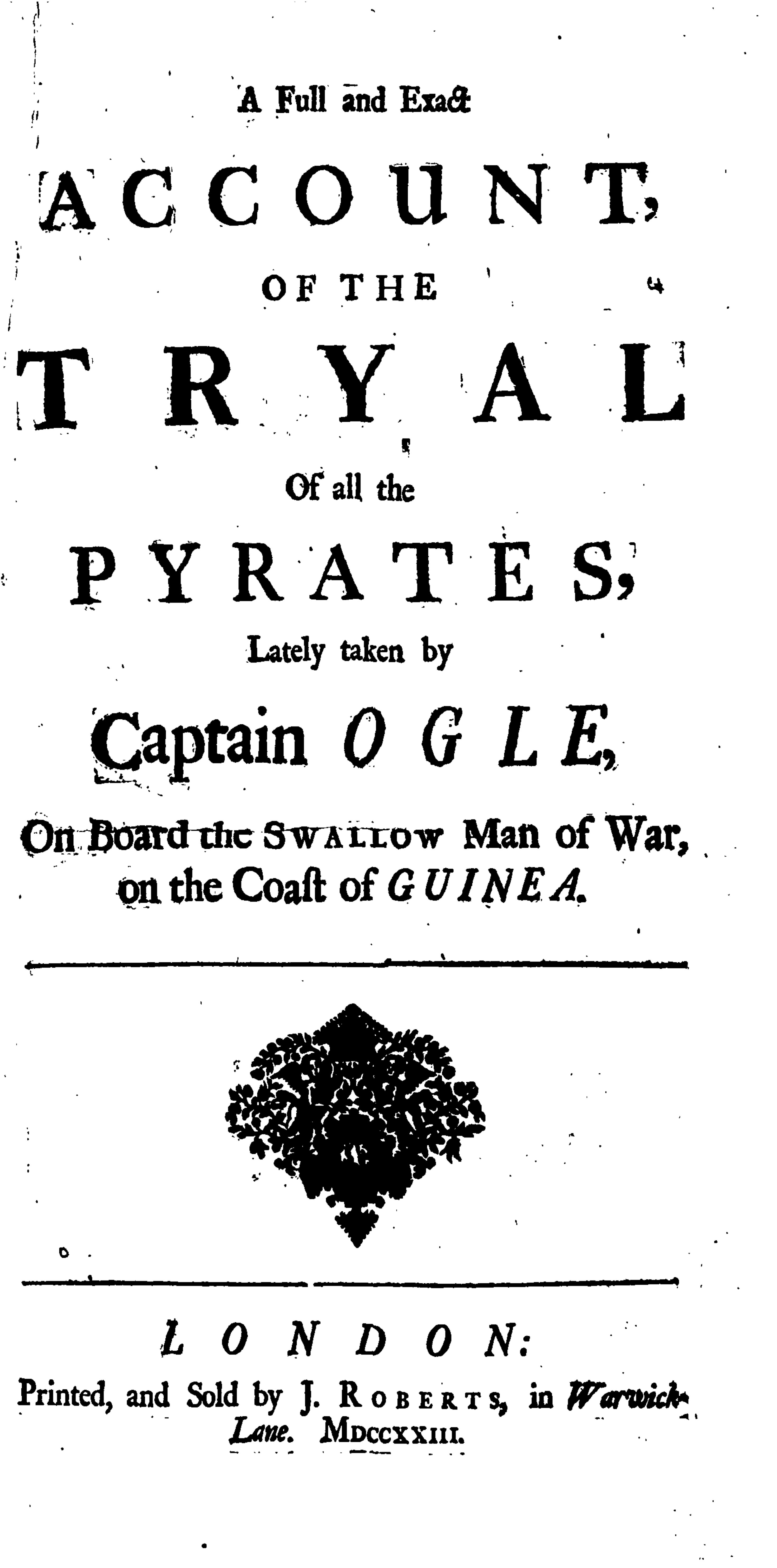
The superlative is carried with its grade showing, because Sailing the Black Flag: The Archives has decided to keep it and to keep it honest. This was the largest mass execution of pirates of the whole Golden Age. The underlying count, the fifty-two, is confirmed from the trial pamphlet. The word "largest" is a comparative claim, resting on a reading across many crews rather than on any single document, so it is carried at probable and marked as such wherever it appears. The number is a fact, the superlative is a judgement, and the page shows which is which.
Beside the death off Cape Lopez, the shape of the whole thing comes clear. The Pirate War did not end by attrition, one small loss after another until the company faded. It ended in two blows the state struck and wrote down: a naval action that killed the captain in a morning, and a mass judicial killing on shore six weeks later. A government at sea, answered by the government that could not allow it.
What ended here is worth naming precisely, because the Collection has spent eight rooms being precise. Roberts himself was never tried; he was killed in action, and "proven" can attach only to the proceedings against his crew, never to him. The men who could vote a captain in and article themselves together were hanged in batches on a beach by a state that had its own written articles and its own courts. The record is strong on how they died, and on the numbers. It is far weaker on what they thought they were building, which is the gap this Collection has tried to keep in view rather than fill.
Two questions this Collection leaves open sit at Kew: the manuscript trial proceedings HCA 1/99, and the Bermuda deposition CO 37/10 that could move the Martinique story off possible. Both are named on the trial page. The story is not finished. It is only as far as the record in evidence can take it.