Gallery · Person · PER-005
Henry Every
Also recorded as: Henry Avery; Bridgeman (1696 proclamations); Long Ben; John Avery (1709 literary error)
Born: 1650s (contested: 1659 Newton Ferrers, 1653 Cattedown, or c. 1656) Died: unknown; disappeared after June 1696, no death record Highly Probable
English pirate who led the 1694 mutiny aboard the Charles the Second and took the Ganj-i-Sawai in 1695, then vanished; his crew were tried in London in 1696.
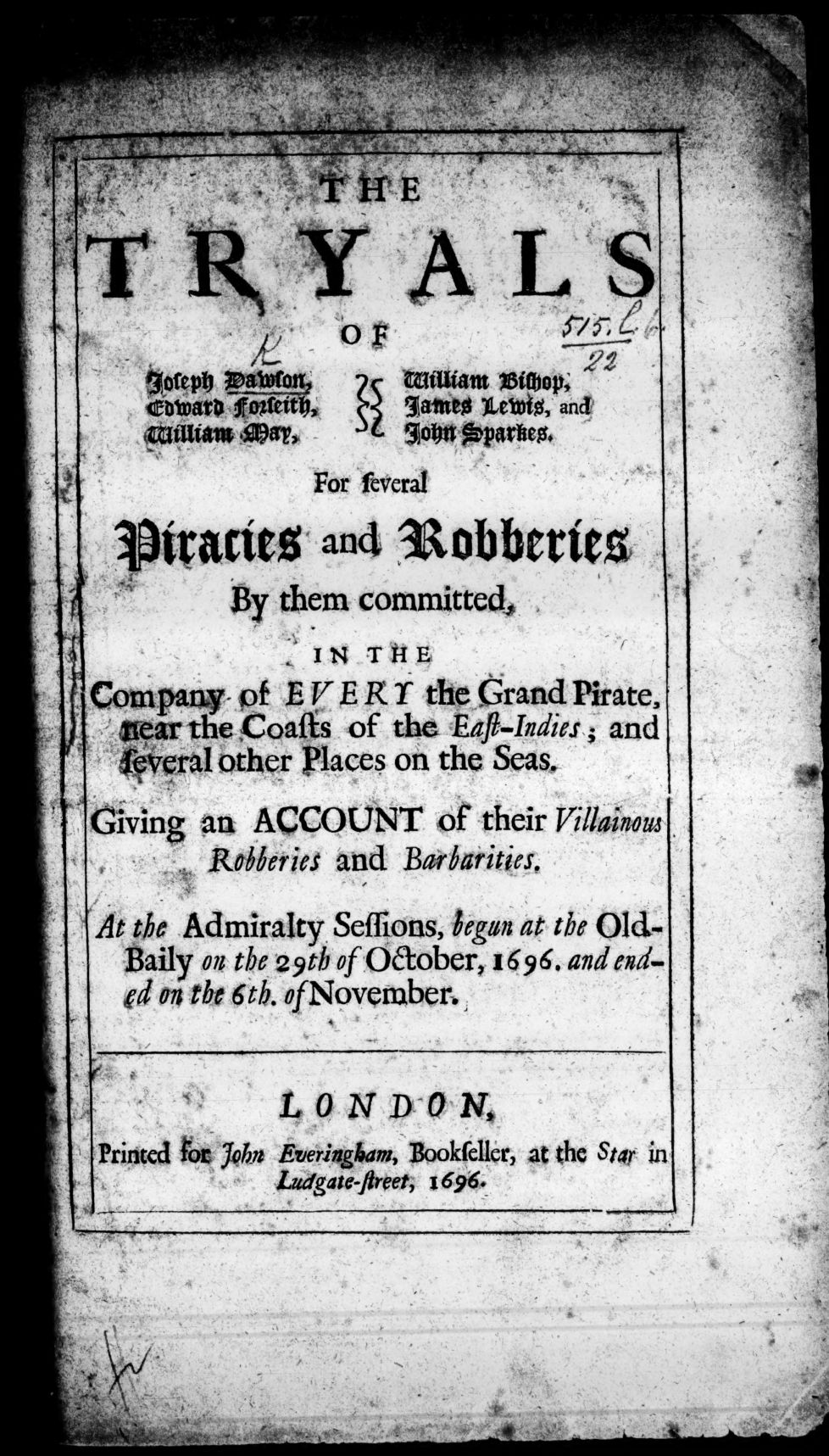
Every is the pirate who got away. The documents record his crime and his crew in detail and say almost nothing about what became of him, and that gap is the shape of his whole story.
The name comes first, because the popular books get it wrong. The documentary form is Henry Every. Avery is a common contemporary and modern variant of the same man, not a second person. John Avery, and its cousin Jack Avery, is a literary error introduced by the 1709 pamphlet attributed to Adrian van Broeck and repeated ever since. His birth is genuinely unsettled: a Devon origin near Plymouth is well grounded, but the year and village compete between 1659 at Newton Ferrers, 1653 at Cattedown, and a c. 1656 implied by his crewman William Phillips putting him at "about 40" in 1696. The 1653 date traces to the same 1709 fiction and is held no higher than Speculative.
He began as a licensed man. He was first mate on the Charles the Second in the Spanish Expedition Shipping venture, a commercial enterprise assembled by Sir James Houblon and London partners in 1693. The squadron then sat idle at Corunna into 1694, waiting on Spanish papers that never came, its crews unpaid. On 7 May 1694 Every led the mutiny that took the ship, was elected captain by the men, and renamed her the Fancy. David Creagh, who was there, dated it in the 1696 trial: "Upon the 7th of May, 1694, I came to the Groin." The mutiny indictment gives a different day, "the 30th of May, in the 6th Year of the Reign", a regnal-year form that resolves to 30 May 1694. The two dates do not reconcile, and Sailing the Black Flag: The Archives keeps 7 May as the working date while recording the indictment's 30 May openly. There is no 30 April variant in the print, whatever the older secondary accounts imply.
The Fancy worked south and then east: English merchantmen robbed at Maio in the Cape Verde islands, African traders lured aboard under English colours and carried off, two Danish ships taken at Principe, a town on the Somali coast burnt after it refused to trade. By mid-1695 the ship lay weeks at Bab-el-Mandeb with other English pirates, usually identified as Thomas Tew's company, waiting for the Mughal pilgrim fleet returning from the Red Sea. The trial print names no captains for those consorts, only that other English privateers joined. In September 1695 the company took two of the fleet: the escort Fateh Muhammed, which the indictment dates 28 September, forty leagues from Surat, and the emperor Aurangzeb's own great ship, the Ganj-i-Sawai, after a fight of about two hours. The print gives no day-date for the Ganj-i-Sawai; the commonly cited 7 September is secondary work.
Content note: the paragraph that follows describes sexual violence, torture and forced suicide aboard the captured ships.
What happened aboard the Ganj-i-Sawai is attested by two hostile witnesses who agree. The Mughal historian Khafi Khan writes that the pirates spent about a week "stripping the men, and dishonouring the women, both old and young", and that "several honourable women, when they found an opportunity, threw themselves into the sea to preserve their chastity, and some others killed themselves with knives and daggers". Sir John Gayer, the East India Company governor at Bombay, reported in a letter of 12 October 1695 that the pirates tortured captives "to make them confess where their Money was", that an elderly kinswoman of the emperor returning from Mecca was much abused, and that they "forced severall other Women, which Caused one person of Quality, his Wife and Nurse, to kill themselves". One condemns the pirates as infidels; the other needed to distance his Company from them. Neither had reason to invent the same crimes, and the specificity in each is the reason this is held at Highly Probable. The English printed trial secures its case on stolen goods and mentions only that several men were killed, and that silence is itself evidence of how the prosecution chose to shape the record.
The plunder cannot be reduced to one figure. The Gunsway indictment pleads 100,000 pieces of eight and 100,000 chequins; Khafi Khan gives 52 lakh rupees aboard; modern syntheses run from about 325,000 pounds on the Company's reckoning to 600,000 on the Mughal claim. The number that recurs across independent sources is the share, about 1,000 pounds a man for roughly 180 men. The Archives presents the range with each figure tied to its source rather than picking a headline total.
The attack detonated at Surat. The Mughal governor set guards on the East India Company factory, clapped the Company's people in irons, and cut off their communication; Aurangzeb pressed the Company hard, and it undertook to make good the losses and to convoy the pilgrim fleet in future. Gayer's letter and the Company's own petition record the arrests directly, and a Venice letter corroborates the plunder of the fleet through a wholly separate channel. The detailed compensation terms are held at Probable; the crisis and the seizure of the factory are Confirmed.
Then he disappears. The Fancy reached the Bahamas in the spring of 1696, where Every dealt with Governor Nicholas Trott at Nassau and gave up the ship. In late June 1696 he and about twenty men sailed for Ireland on a sloop, scattered, and the reliable trail ends. In December 1698 the Lords Justices' general pardon to pirates excluded only Kidd and Every by name, a reading carried by the calendared State Papers, which shows he was still at large and still wanted more than two years on. No capture, no trial, no confession, no death record survives for the man himself. The disappearance, not a documented death, is where the secure biography stops.
His crew did not get away. Six men were tried at Admiralty sessions in the Old Bailey building in 1696, acquitted at the first sitting on the Ganj-i-Sawai charge, then convicted at a second trial on the Charles the Second mutiny. Five were hanged at Execution Dock on 25 November 1696. The full account sits on the trials page.
The myth audit
Three things attach to Every that need sorting from the record. The alias Bridgeman is real: the 1696 proclamations name "Henry Every alias Bridgeman", and the English proclamation states he "now goes by the Name of Henry Bridgman". The reward is often inflated. The Lords Justices proclaimed 500 pounds for Every on 17 July 1696, with 50 pounds a head for accomplices, and the East India Company agreed to fund the hunt; the frequently repeated combined bounty of 1,000 pounds is not in the proclamation texts and is treated as a secondary claim.
The pauper's death is legend. The story that Every crept home to Devon and died penniless, cheated of his diamonds by Bristol merchants, "not being worth as much as would buy him a coffin", comes from Johnson's General History, Vol. 1 (1724) and behind it the 1709 van Broeck fiction. There is no primary death record to support it, and the practical objection is hard to answer: a known pauper carrying that bounty would likely have been given up. Modern scholarship places his death at an unknown point between roughly 1699 and 1714 and treats the fate as open. The Archives records the pauper ending at Speculative and never as biography.
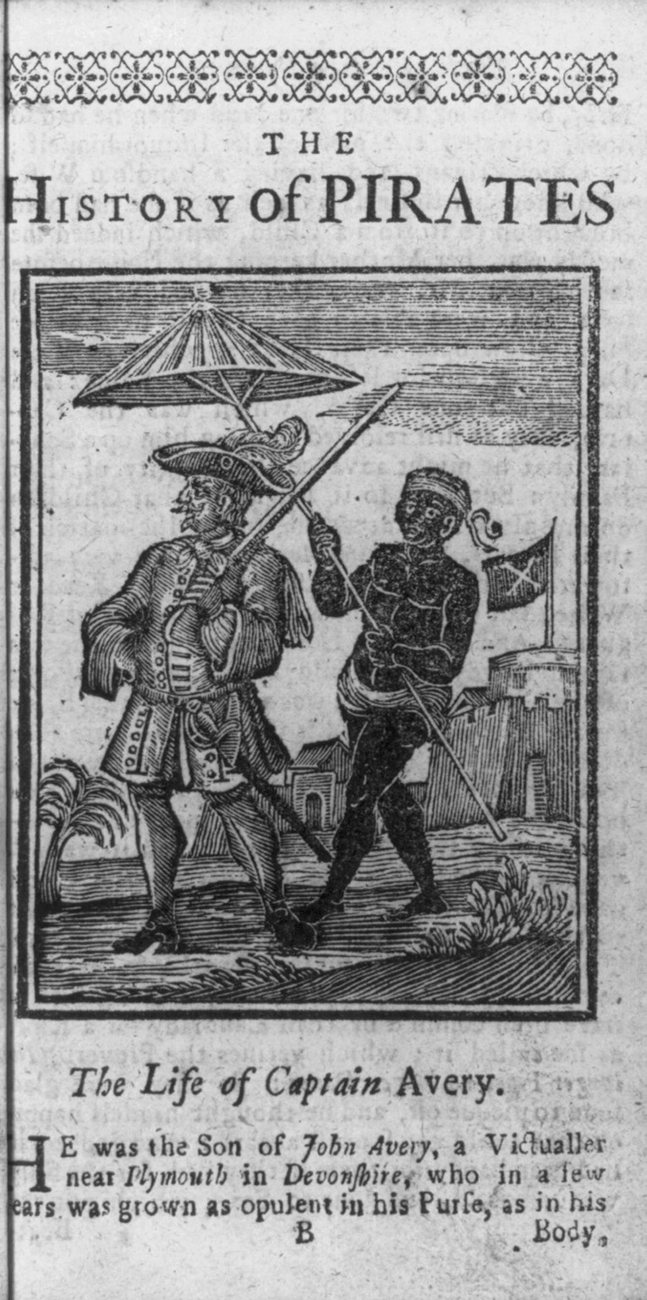
The record here is strong on the crime and the crew and blank on the man's end. That is the honest condition of the Every corpus, and this page keeps to it, stating its confidence claim by claim below.
Connections
- Henry Every commanded Fancy
- Henry Every captured Ganj-i-Sawai
- Henry Every crew tried in Trials of Every's Crew
- Trials of Every's Crew tried the crew of Henry Every
- The Tryals of Joseph Dawson and Others (1696) connected to Henry Every
Evidence behind this record
- On 7 May 1694 Every led the mutiny that seized the Charles the Second at Corunna, was elected captain, and renamed her the Fancy. Trial record and pirate declaration: Printed 1696 trial record (A63217), Every's own Johanna declaration and David Creagh's testimony ('Upon the 7th of May, 1694, I came to the Groin')
- The mutiny indictment dates the taking of the Charles the Second to 30 May 1694, a regnal-year form ('the 30th of May, in the 6th Year of the Reign'); the working date of 7 May 1694 rests on Every's declaration and Creagh's testimony, and the two dates do not reconcile. Trial indictment: Printed 1696 trial record (A63217), indictment read verbatim; no '30 April' variant exists in the print; the 7 May / 30 May conflict stays logged as unresolved
- Every's company took the Moorish ship Fateh Muhammed on 28 September 1695, forty leagues from Surat. Highly Probable Trial indictment: Printed 1696 trial record (A63217): 'on the 28th of September, 1695. in a Place 40 Leagues distant from Surrat'; this indictment date belongs to the Fateh Muhammed, not the Ganj-i-Sawai
- Every's company captured the Ganj-i-Sawai near Surat in early to mid September 1695; the printed trial gives no day-date for the taking. Highly Probable Trial record and secondary chronology: Printed 1696 trial record (A63217): 'ten Leagues from the Cape St. Iohns near Surat', no day-date; the commonly cited 7 September 1695 is secondary. The print's silence on the day-date is confirmed
- Sexual violence, torture and forced suicides aboard the captured Indian ships are attested by two independent and mutually hostile sources: the Mughal historian Khafi Khan and the East India Company governor Sir John Gayer. Highly Probable Mughal chronicle and company letter: Khafi Khan, Muntakhab-ul-Lubab, trans. Elliot and Dowson vol. 7, pp. 350-351; Sir John Gayer's Bombay letter of 12 October 1695 (Jameson doc 60). The English printed trial confines itself to property crime and records only that several men were killed. No source gives reliable numbers
- The attack triggered a diplomatic crisis at Surat: the Mughal governor imprisoned the East India Company factors and Aurangzeb pressured the Company, which undertook to make good the losses and to convoy the pilgrim fleet. Company letter and petition: Gayer's Bombay letter of 12 October 1695 (Jameson doc 60) and the East India Company petition (Jameson doc 58), corroborated by the Venice letter (doc 61). Rendered at Confirmed for the crisis and the factory seizure; the compensation terms sit at Probable, a compound grade shown here at the stronger grade with the weaker component named in prose
- The plunder is reported at widely different figures across the sources; the one figure that recurs is a share of about 1,000 pounds a man for roughly 180 men. Trial indictment, deposition and chronicle: Gunsway indictment (100,000 pieces of eight plus 100,000 chequins); Khafi Khan (52 lakh rupees aboard); Dann (about 1,000 pounds a man); modern totals range from about 325,000 to 600,000 pounds. Rendered at Confirmed that the estimates vary; any single total is Probable, a compound grade shown at the stronger grade with the weaker component named in prose
- Every was never caught; no reliable trace of him survives after June 1696, and no primary record fixes the fact, date or place of his death. Corpus-level negative finding: The manhunt proclamations never closed the case; a NEGATIVE FINDING that no primary death record was located. The disappearance, not a documented death, is the terminus of the secure biography
- The 1696 proclamations name 'Henry Every alias Bridgeman'; the alias Bridgeman is a documented one Every used during and after his piracy. Proclamation: English Lords Justices proclamation (EEBO A39489) which states he 'now goes by the Name of Henry Bridgman'; Scottish Privy Council proclamation (EEBO B05636)
- The Lords Justices proclaimed a reward of 500 pounds for Every on 17 July 1696, and the East India Company agreed to fund the hunt; the often-repeated combined 1,000-pound bounty is not in the proclamation texts. Proclamation and company records: Lords Justices proclamation of 17 July 1696 (SRC-EVR-201), 500 pounds for Every and 50 pounds per accomplice. Rendered at Confirmed for the 500-pound reward and the EIC funding; the 1,000-pound top-up is a secondary claim treated as Probable
- The first trial was a single sitting on Monday 19 October 1696 at which the jury, against the court's expectation, acquitted the prisoners on the Ganj-i-Sawai indictment. Trial record: Printed 1696 trial record (A63217), body reading 'Monday the 19th Day of October' and 'the Jury, contrary to the expectation of the Court, brought in all the Prisoners Not Guilty'; the title-page date of 29 October is a printer's error
- Six men were condemned; five were hanged at Execution Dock on 25 November 1696 (Forseith, May, Bishop, Lewis and Sparkes), and Joseph Dawson, who had pleaded guilty, was reprieved. Trial record: Printed 1696 trial record (A63217): 'Edward Foreseth and the rest were Executed, on Wednesday, November the 25th 1696, at Execution-Dock'. Rendered at Confirmed for the six condemnations and the 25 November execution; the Dawson reprieve sits at Probable, a compound grade shown at the stronger grade with the weaker component named in prose
- The story that Every returned home and died poor after being cheated of his diamonds is legend, derived from van Broeck (1709) and Johnson's General History, Vol. 1 (1724); no primary death record exists. Speculative Secondary and literary accounts: Johnson, General History, Vol. 1 (1724), 'not being worth as much as would buy him a coffin'; the 1709 van Broeck pamphlet is fiction. Always flagged as legend
- The preferred documentary form of the name is 'Henry Every', with 'Avery' a common contemporary and modern variant; 'John Avery' is an erroneous literary form from the 1709 pamphlet. Highly Probable Documentary and secondary: Contemporary spellings and the 1709 van Broeck pamphlet as the origin of the 'John Avery' error
- Every's birth year and place are unresolved: 1659 at Newton Ferrers, 1653 at Cattedown near Plymouth, or c. 1656 from the Phillips deposition. Possible Parish and deposition readings: Competing versions; the 1653 Cattedown claim traces to the unreliable 1709 pamphlet and is capped at Speculative. Sources agree only on Devon origin near Plymouth
Open research
Birth year and place are unresolved: 1659 at Newton Ferrers, 1653 at Cattedown, or c. 1656 from the Phillips deposition (Possible). There are no endpoint documents for Every himself, no capture, trial, confession or death record; the corpus documents his crew and his crime, not his end. The pauper-death ending is legend from van Broeck (1709) and Johnson, General History, Vol. 1 (1724).