Gallery · Bartholomew Roberts and the Pirate War · Room 2 of 8
The Articles
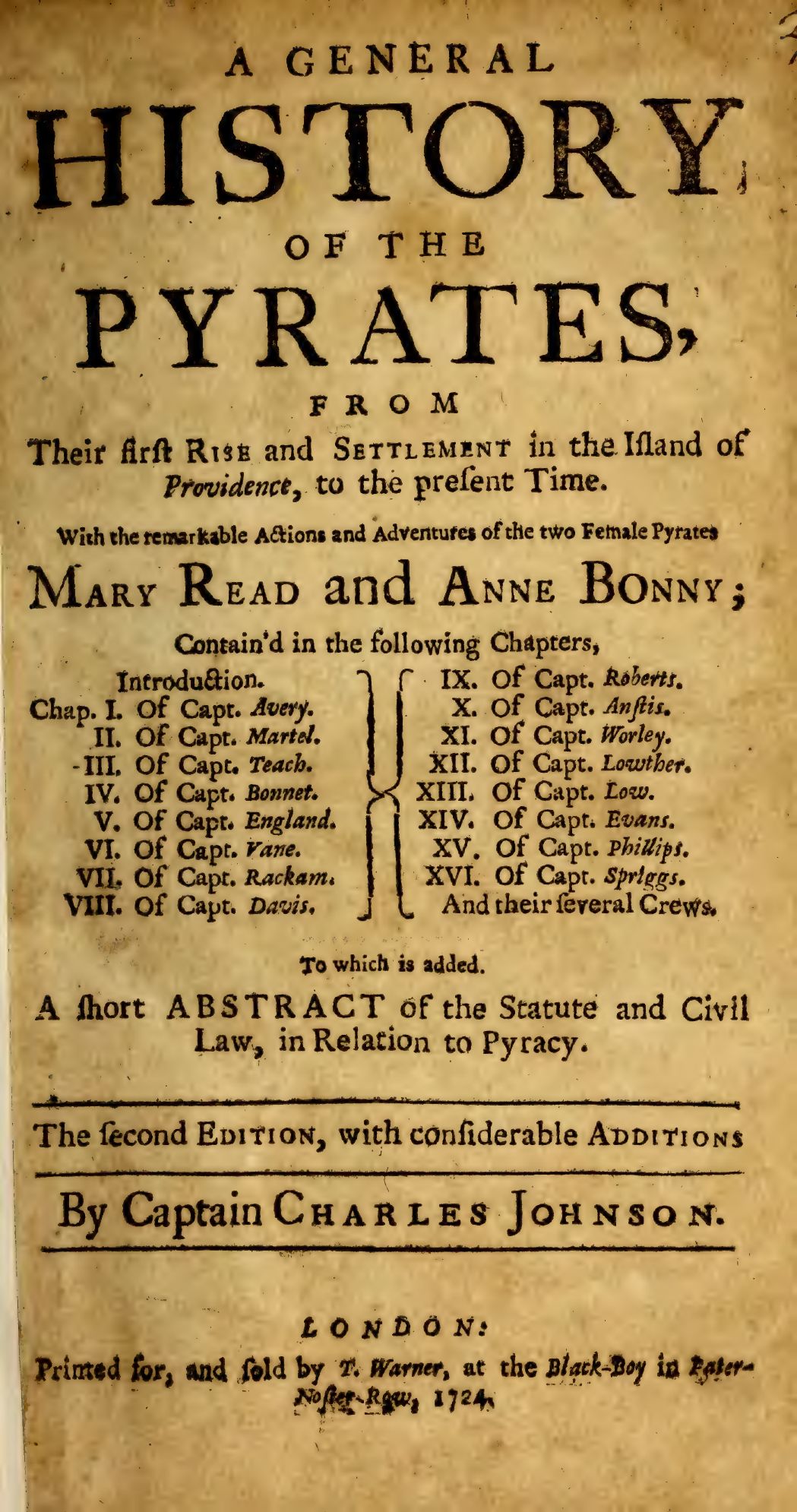
Roberts's company bound itself by written articles, eleven of them as Johnson prints them. They are the fullest single pirate code the period gives us, and the reason the best-known pirate constitution in the world is his.
They read like the by-laws of a company, because that is what they were. Every man had a vote in affairs of moment and an equal share of fresh provisions and strong liquor. Plunder was divided by a fixed scale, the captain and quartermaster drawing more than the rest but not by much. Lights and candles out by eight. No boy or woman aboard. Desertion in action, or holding back a share, punished by marooning or death. A man crippled in service was compensated from the common stock at a set rate, so many pieces of eight for a right arm, fewer for a left, fewer again for an eye. Disputes settled ashore, at sword and pistol, because a ship was no place to let two men fight.
The code's fragility is the room's real subject. This best-known of pirate constitutions survives for one reason: a printed book, Johnson's General History of 1724, copied it down. No independent manuscript of Roberts's articles has ever been found. Neither the 1723 trial record nor Atkins's memoir reproduces them. So Sailing the Black Flag: The Archives caps the verbatim text at possible and treats the eleven articles as tradition carried by a single author, however plausible each clause looks.
One distinction carries the whole Pirate Government argument. The text is Johnson's. The institution is not. That pirate companies did in fact bind themselves by sworn written articles, elect their officers, and divide plunder by an agreed scale is carried by sworn depositions across four Vice-Admiralty courts, Roberts's own included. The court that tried his crew opens its indictment by calling them men "wickedly united, and Articled together". The state, prosecuting, took the articling for granted. It is the practice, not Johnson's particular eleven clauses, that the depositions establish.
What the record cannot give is the argument in the room. We have, at best, the rules a company agreed. We do not have the debate that produced them, the clause someone objected to, the compromise struck on the compensation rate. The theme page on pirate articles generalises from this code to the others; the 1723 trial record is where the institution, as opposed to the printed text, can be read in men's sworn words.