Gallery · Person · PER-009
Mary Read
Also recorded as: Mary Read (spelling stable across the period documents); Mary Road (London Journal, 1721; a period slip); Mark Read (alleged male alias; Johnson-derived)
Born: unknown (no primary; the English birth is Johnson's) Died: buried 28 April 1721, St Catherine parish, Spanish Town, Jamaica
Documented member of John Rackham's crew, 1720; convicted at Spanish Town, reprieved on pleading pregnancy, died in custody; buried 28 April 1721.
The best-documented moment in Mary Read's life is her burial. The St Catherine parish register at Spanish Town records a Mary Read buried on 28 April 1721, and the original leaf adds the word "pirate" beside the name, an annotation the later transcriptions drop. She had been condemned the previous November and died in custody before any execution. The cause is not documented. Johnson reports a fever; a modern retelling calls it typhus; childbirth has been guessed. The register gives a date and a name, and stops there.
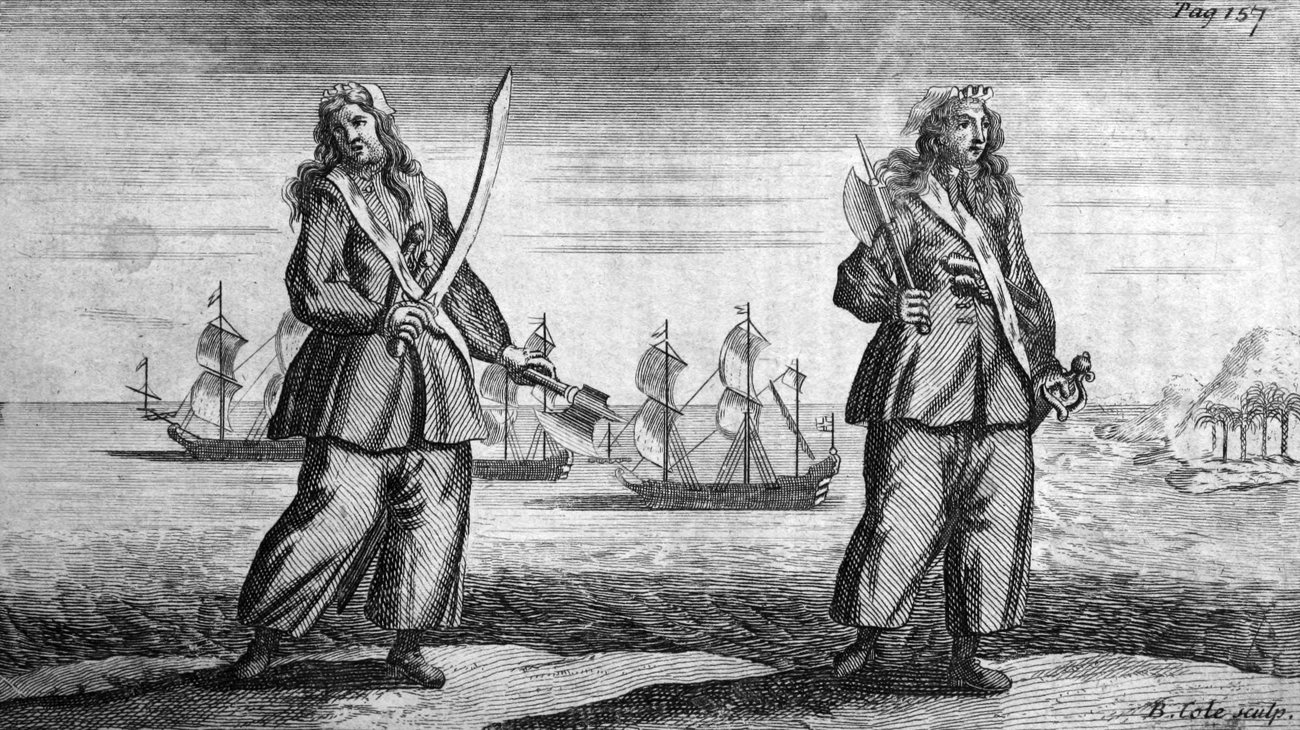
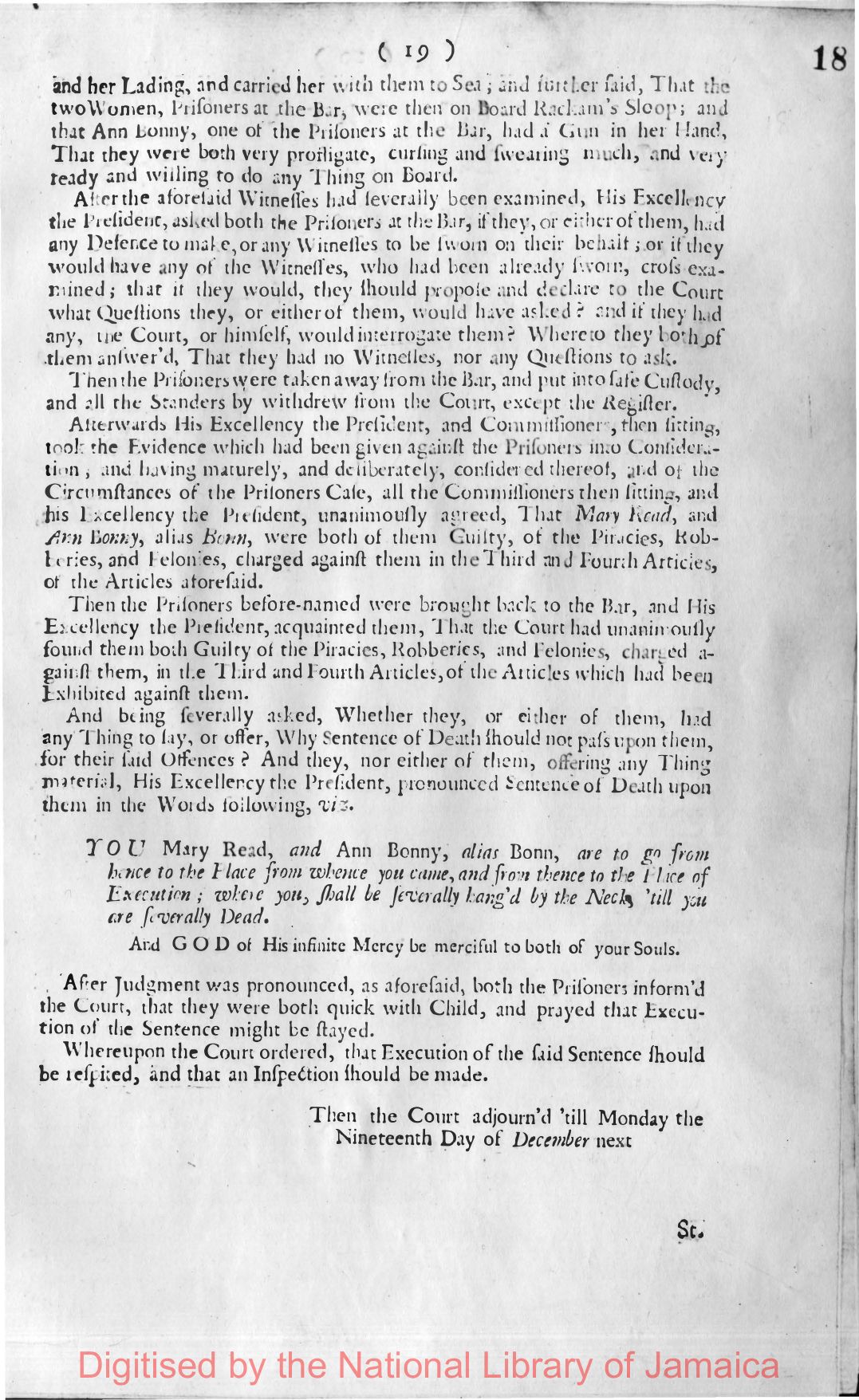
Working back from the grave, the documented life is short. She was named, without any alias, in Woodes Rogers' proclamation of 1720, reprinted in the Boston Gazette of 10 to 17 October 1720. She was aboard the stolen sloop William, taken with John Rackham's company off western Jamaica in late October 1720, and tried with Anne Bonny at St Jago de la Vega on 28 November 1720. The same witnesses spoke of both women together: men's jackets and long trousers, a machete and a pistol each, cursing and swearing, "very active on Board, and willing to do any Thing", acting "of their own Free-Will and Consent". Dorothy Thomas knew them for women "by the largeness of their Breasts". Read pleaded her belly with Bonny, the court ordered the inspection, and the print records no outcome.
One point matters for calibration. The trial individuates nothing to Mary Read. No witness separates her conduct from Bonny's. No act, no gun fired, no blow struck is charged to her rather than to the pair. She is a distinct legal person, named separately and convicted separately, but the record of what she did is a joint record.
The soldier's tale
The life that makes Mary Read famous is Johnson's, told in the General History, Vol. 1 (1724), and it is uncorroborated from end to end: an English birth to a widow, a childhood disguised as a boy to secure an inheritance, service as a footboy, then on a man-of-war, then as a foot soldier and a dragoon in Flanders, marriage to a fellow trooper, the keeping of an inn called the Three Horseshoes near Breda, widowhood, and a voyage to the West Indies that ended in piracy. No muster roll, marriage record or inn of that name has been found. Even her nationality is Johnson's word.
Two set-pieces deserve naming, because they are quoted as fact. The duel, in which Read is said to have picked a quarrel with a shipmate who threatened the man she loved and killed him with pistol and cutlass, is the only killing ever laid to her, and it is Johnson only. So is the courtroom answer that hanging was no great hardship, "for were it not for that, every cowardly fellow would turn pirate", a line the trial print does not contain and which the carriers cannot even quote the same way twice. They are best read as Johnson wrote them, as story, and kept out of the evidence.
Connections
- John Rackham sailed with Mary Read
- Anne Bonny tried with Mary Read
- Mary Read tried in The Trials of Rackham's Company
Evidence behind this record
- Rackham's company stole the sloop William, about twelve tons, owner John Ham, out of Nassau harbour on 22 August 1720, with Anne Bonny and Mary Read aboard. Highly Probable Proclamation (via contemporary reprint): Woodes Rogers' proclamation, reprinted in the Boston Gazette 10-17 October 1720; known from later carriers; the original issue is not in evidence
- The proclamation named the company pirates, including "Ann Fulford alias Bonny" and Mary Read (no alias); the Boston Gazette reprint of 10-17 October 1720 is the earliest datable naming of the two women. Highly Probable Proclamation (via contemporary reprint): Boston Gazette 10-17 October 1720; the original issue is not in evidence
- Barnet's sloop took the William off western Jamaica near Negril Point in late October 1720. Governor Lawes' letter of 13 November 1720 suggests a capture around 30 October; the frequently cited 22 October is the date the Negril men are charged with going over to Rackham, not a capture date, and the print does not date the seizure. Highly Probable Correspondence and trial record: Lawes to London, 13 November 1720, CSP Colonial vol 32 item 288; The Tryals (1721) marked p32
- Mary Read and Anne Bonny were tried at St Jago de la Vega on 28 November 1720, pleaded not guilty, and were found guilty on the third and fourth articles and sentenced to death. Trial record: The Tryals (1721), women's trial
- Dorothy Thomas deposed that the two women wore "Mens Jackets, and long Trouzers, and Handkerchiefs tied about their Heads", that each "had a Machet and Pistol in their Hands", and that they "cursed and swore at the Men, to murther the Deponent"; she knew them for women "by the largeness of their Breasts". Trial testimony: The Tryals (1721), Dorothy Thomas deposition, marked p18
- The French prisoners John Besneck and Peter Cornelian testified that the women were "very active on Board, and willing to do any Thing", that Ann Bonny "handed Gun-powder to the Men", and that they did not seem detained by force "but of their own Free-Will and Consent". No witness reported either woman firing a gun or fighting hand to hand. Trial testimony: The Tryals (1721), Besneck and Cornelian, marked p18
- After sentence both women informed the court "that they were both quick with Child", and the court ordered execution respited "and that an Inspection should be made". The print records the order but no outcome: no inspection result, no reprieve and no later hearing of the two women. Trial record: The Tryals (1721), marked p19
- The tradition that Read and Bonny alone fought the boarders while the men hid below, and Bonny's parting rebuke that Rackham should have fought like a man, are Johnson-only and absent from the trial print. Possible Near-contemporary narrative: Johnson, General History, Vol. 1 (1724); not in The Tryals (1721)
- Mary Read died in custody and was buried on 28 April 1721; the St Catherine parish register records the burial, and the original leaf annotates the entry "pirate". The cause of death is undocumented (Johnson reports a fever; typhus is a modern gloss). Highly Probable Parish register (reported): St Catherine burial register, Spanish Town, 28 April 1721
- No period evidence distinguishes Read's conduct from Bonny's; the trial individuates no act to Read. The duel she is said to have fought and the courtroom speech attributed to her are Johnson-only and absent from the trial print. Highly Probable Trial record and narrative: The Tryals (1721), joint testimony; Johnson, General History, Vol. 1 (1724)
- Read's entire pre-1720 biography (an English birth, a childhood disguised as a boy, soldiering in Flanders, the inn called the Three Horseshoes near Breda) rests on Johnson (1724); her nationality is Johnson's word, and no muster roll, marriage record or inn of that name has been found. Possible Near-contemporary narrative: Johnson, General History, Vol. 1 (1724)
Open research
The burial of 28 April 1721 in the St Catherine register, the original leaf annotated "pirate", is the best-documented fact about her; the cause of death is undocumented (Johnson's fever; typhus a modern gloss). The trial individuates no act to her rather than to Bonny. The whole pre-1720 biography (English birth, boy's disguise, Flanders soldiering, the Three Horseshoes near Breda), the duel and the courtroom speech are Johnson-only (Possible). The original register leaf has not yet been examined; examining it would lift the burial to Confirmed.