Gallery · The End of the Golden Age · Room 6 of 9
The Gallows
The fourth instrument was the one meant to be seen. Where the pardon and the law worked on paper, the gallows worked in public, in a sequence of set-piece trials read as a single message. The arc opens at Boston in 1717, when six of Samuel Bellamy's Whydah crew, tried at a Court of Admiralty, were hanged at Charlestown Ferry on 15 November 1717: Van Vorst, Brown, Baker, Quintor, Hoof and Shuan.
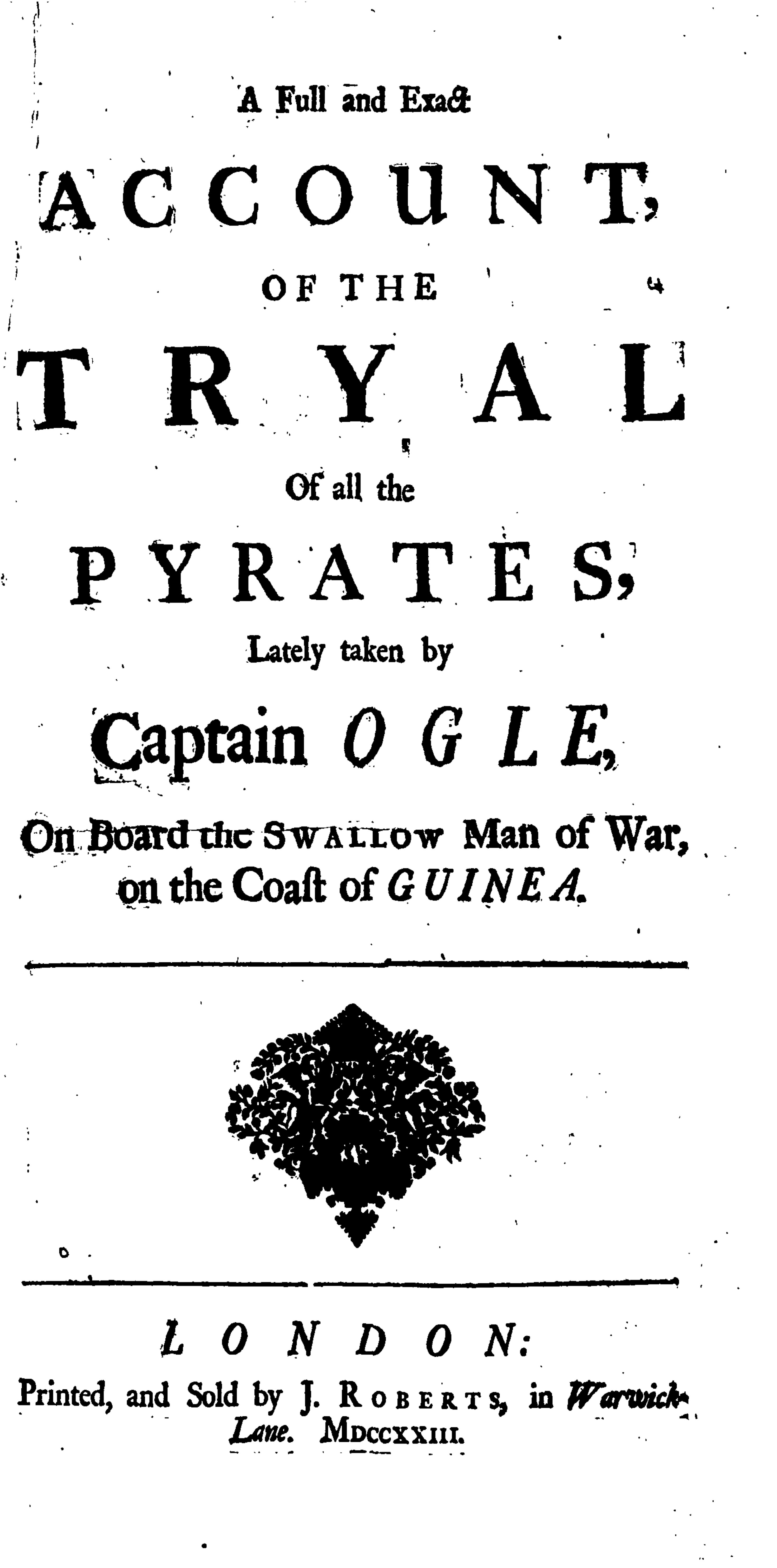
It reaches its height at Cape Coast Castle in the spring of 1722. The printed record above gives the numbers: fifty-four of Bartholomew Roberts's captured crew condemned, and fifty-two hanged, with seventy-four acquitted and twenty sent to servitude. The fifty-two is the largest single execution of pirates in the whole age. The count is Confirmed from the print; the word "largest" is a comparison, and the Archive carries it one step lower. Probable The superlative is graded Probable because it rests on a comparison across crews that cannot yet be fully held; the fifty-two itself does not move.
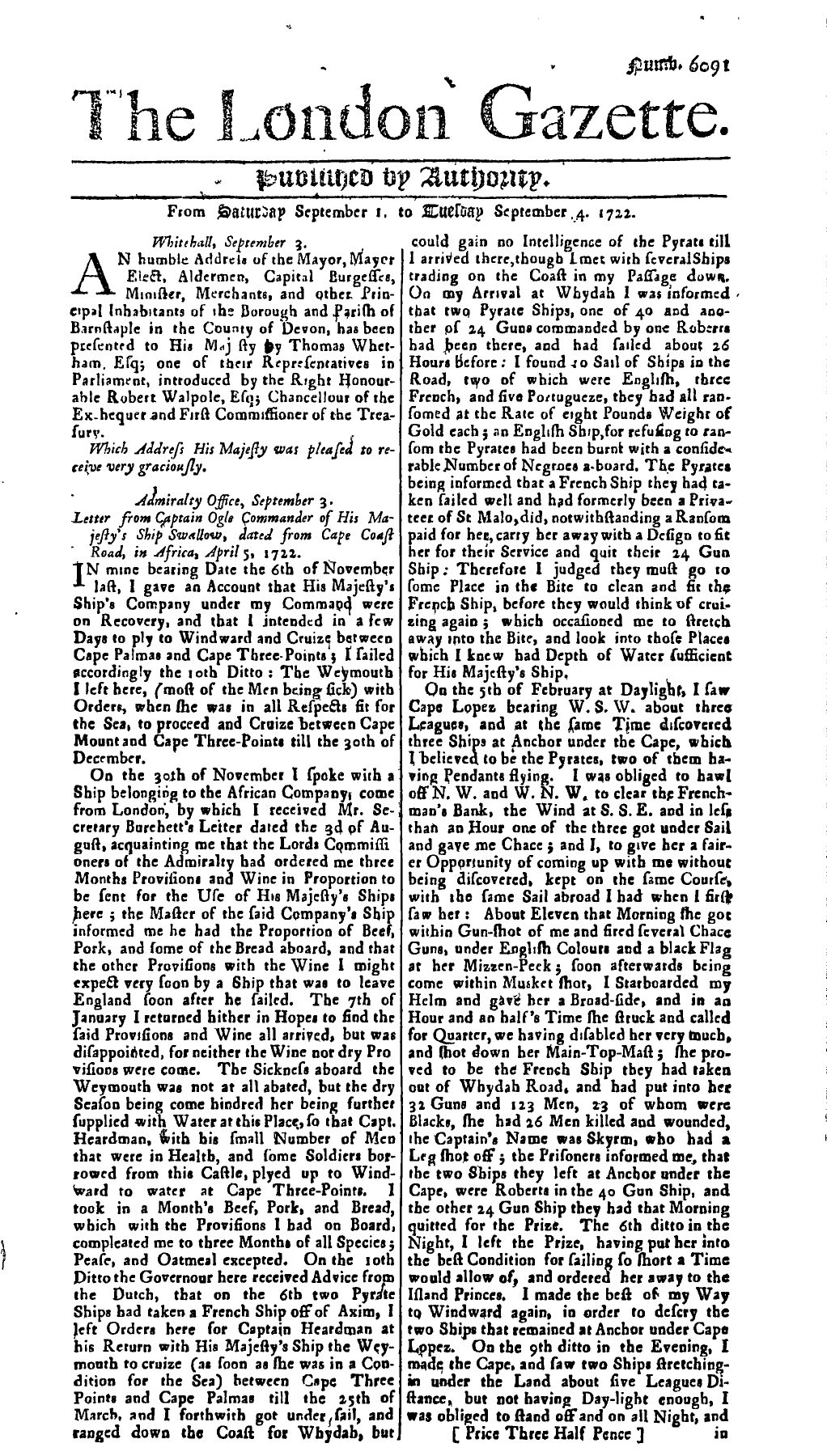
The same pamphlet reprints the flat official notice that connects the navy to the gallows: Chaloner Ogle's dispatch, printed verbatim in the London Gazette, on the action off Cape Lopez.
"The Captain, whose Name was Roberts, was killed"
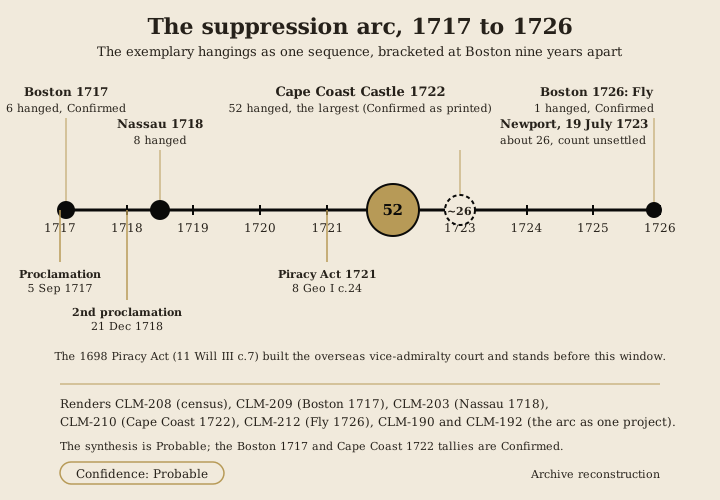
- Boston, November 1717: six of Bellamy's crew hanged (Confirmed).
- Nassau, December 1718: eight hanged.
- Cape Coast Castle, spring 1722: fifty-two hanged, the largest single event (Confirmed as printed).
- Newport, Rhode Island, 19 July 1723: about twenty-five or twenty-six of Low's Ranger crew hanged, the count unsettled.
- Boston, 12 July 1726: William Fly hanged, the closing anchor (Confirmed).
- Set beneath the line: the proclamations of 5 September 1717 and 21 December 1718 and the Piracy Act of 1721. The arc-as-one-project reading is carried at Probable; the Boston 1717 and Cape Coast 1722 tallies are Confirmed.
The Cape Coast trial itself belongs to the Roberts Pirate War Collection's executions room, which owns the case, the crew as a polity, and the court's own words. This room cites the fifty-two and points across rather than retrying it. What this room adds is the reading of the whole arc as exemplary theatre, the state hanging in public to be watched, from six men at Boston to fifty-two on a beach in Guinea. The theatre ends with one man, and that is the next room.
Records in this room
- Document A Full and Exact Account of the Tryal of all the Pyrates (1723) The printed record of the Cape Coast Castle trial of Roberts's crew, London 1723. It reprints Ogle's dispatch, the indictment, the sworn depositions (including the Porcupine burning), the servitude indentures and the summary tables of verdicts.
- Event The Cape Coast Trial and Executions, 1722 The Vice-Admiralty court held at Cape Coast Castle (Cabo Corso) on the Guinea coast that tried the surviving crew taken from Roberts's ships. Of those brought before it, 74 were acquitted, 52 hanged, and 20 sentenced to seven years' servitude to the Royal African Company; 17 were referred to the Marshalsea in London. It was the largest mass execution of pirates of the Golden Age, a superlative carried at Probable.