Gallery · Theme · THM-005
The End of the Golden Age
Also recorded as: The Suppression of Piracy; The Golden Age of Piracy (the modern label); The Golden Age of Pirates (Fiske 1897)
From: c. 1716 To: 1726 Highly Probable
The suppression of large-scale Atlantic piracy in roughly 1716 to 1726 by a coordinated state programme of law, navy, pardon and exemplary justice, and the modern 'Golden Age' construct itself. The label is a late-Victorian coinage; the events are real.
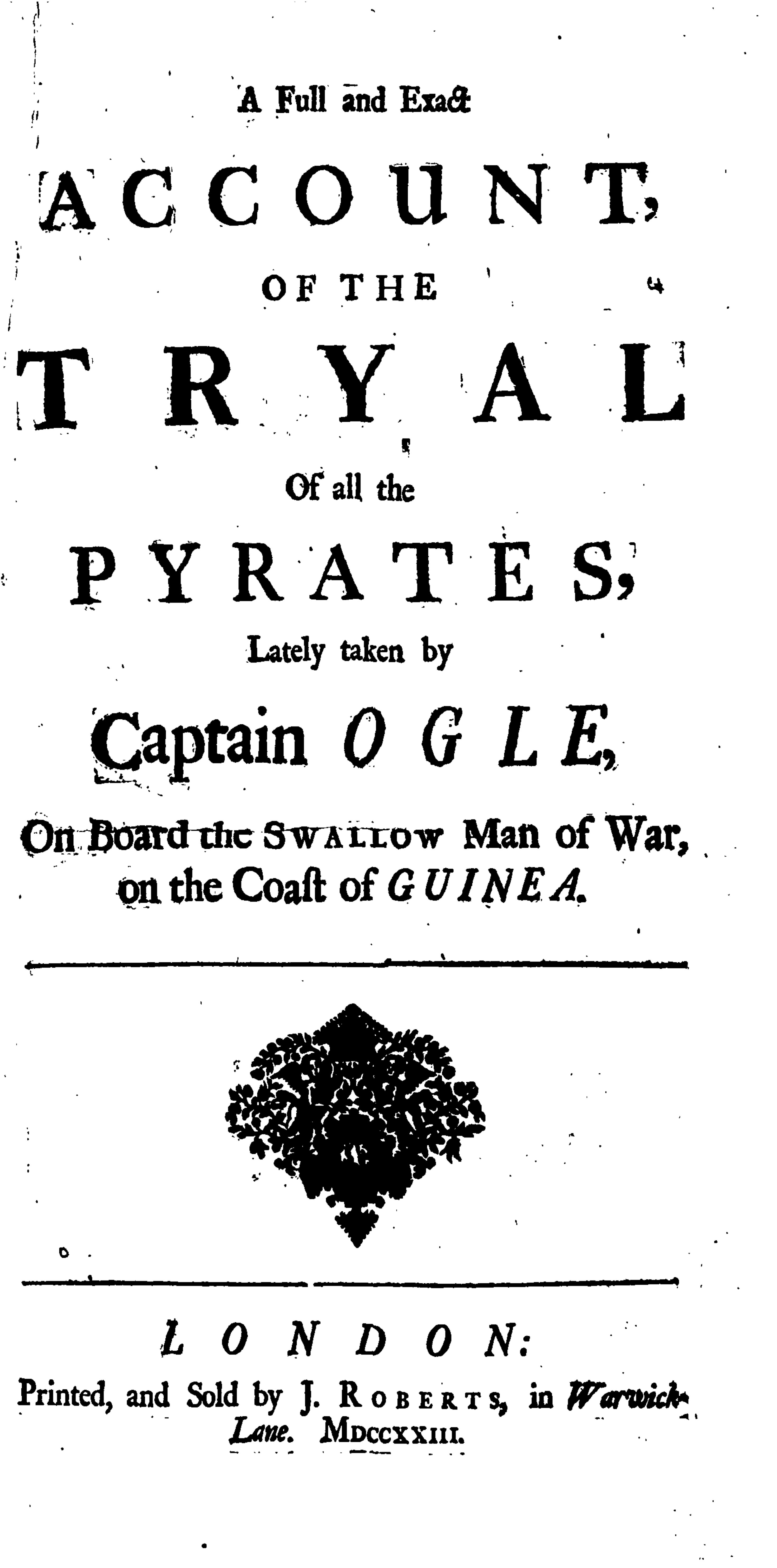
The events were real; the name came later. Large-scale Atlantic piracy was suppressed in about a decade after the War of the Spanish Succession, put down by a coordinated state programme rather than by any single pirate death. The label under which we remember it is a construct, and a late one.
The construct
"The Golden Age of Piracy" is a modern retrospective phrase, not a period one. The earliest systematic use yet found is a chapter title: John Fiske, in Old Virginia and Her Neighbours (1897), headed Chapter XVI "The Golden Age of Pirates," opening it "The business of piracy has never thriven so greatly as in the seventeenth century." The exact wording is "of Pirates," not "of Piracy." An earlier casual use is attributed to the journalist George Powell in 1894, an attribution resting on report rather than on his text, and that attribution is Probable. The academic historians who later fixed the phrase in place did not coin it; Fiske predates them by roughly a century, and the pirates themselves never used it at all.
The collapse as a state project
The suppression ran on four instruments working together: legal reform, naval force, the pardon, and exemplary public justice. The pardon has its own record; the other three met the pirates who refused it.
The legal spine was old and then sharpened. The Piracy Act of 1698 (11 William III, chapter 7) let the Crown try pirates by vice-admiralty commission overseas, before a court of at least seven commissioners, instead of shipping them home for trial. The 1726 Boston trial print states the chain on its own title page: the commission was "founded on an act ... made in the eleventh and twelfth years of the reign of King William the Third ... And made perpetual by an act of the sixth of King George." That flag matters, because the perpetuation is credited to 6 George I on the period print itself, not to the statute usually assumed. The Piracy Act of 1721 (8 George I, chapter 24) then went after the pirates' shore-side support: trading with or supplying pirates was itself made a capital crime, and a merchant mariner who failed to defend his gunned ship was to "forfeit all ... his wages ... and shall suffer six months imprisonment." The merchant marine was conscripted into the fight.
Naval force supplied the ships. Station cruisers and dedicated men-of-war hunted the companies down, HMS Swallow destroying Bartholomew Roberts's company off West Africa in February 1722 being the clearest single blow. The naval strand is the thinnest in digitised sources and largely survives in the Admiralty series at Kew.
The pardon, the state's mercy, ran in parallel and is treated in its own record, pirate pardons. It was the carrot; the three instruments above were the stick.
Exemplary justice: the executions census
The gallows did the public work. The point of a mass hanging was to be seen, and the record from 1717 to 1726 reads as a sequence of set-piece trials. Six of Samuel Bellamy's crew were hanged at Boston in November 1717. Eight of the relapsed pardon-holders were hanged at Nassau in December 1718 under Woodes Rogers. The largest of them came at Cape Coast Castle on the West African coast in the spring of 1722, where 52 of Roberts's crew were hanged, the largest mass execution of the age (the count is Confirmed, the superlative graded Probable), tried at the Cape Coast trial that closed out the Roberts pirate war. Charles Harris and about twenty-five of Low's company followed at Newport in July 1723, the exact count still unsettled between the printed and secondary figures.
The close
The closing anchor is a Boston courtroom in 1726. The printed record, The Tryals of Sixteen Persons for Piracy, carries the winding-down in its own subtitle: "Four of which were found guilty, and the rest acquitted." By 1726 the courts convicted only four of sixteen. William Fly, the last celebrated Golden Age pirate, was hanged in Boston on 12 July 1726 and his body carried out to be gibbeted in chains at Nix's Mate in the harbour. The theatre that had begun with six men at Boston in 1717 ended with one man at Boston nine years later.
The window
The Archive treats the end of the Golden Age as the collapse of the post-war surge across roughly 1716 to 1726. That is the narrow academic frame, and it is a deliberate editorial choice. The phrase itself has always been broader: Fiske's 1897 usage ran to about 1650 to 1720 and took in Asian and Indian Ocean piracy; Cordingly stretches it to the 1650s to about 1725; Konstam tightens it to 1714 to 1722. The Barbary corsairs, East Asian piracy and later nineteenth-century piracy fall outside this theme by that same editorial narrowing.
What the sources cannot yet give cleanly is the last chapter: the governor's report that the coast was finally clear. No such closing despatch is in evidence here; it would lie in the colonial papers of 1724 to 1726, and the page asserts the suppression from its instruments and its executions, not from a despatch it cannot quote.
Connections
- The End of the Golden Age features The End of the Golden Age
Evidence behind this record
- "The Golden Age of Piracy" is a modern retrospective phrase, not a period one. The earliest systematic use found is a chapter title: John Fiske, Old Virginia and Her Neighbours (1897), Chapter XVI, "The Golden Age of Pirates" (the wording is "of Pirates", not "of Piracy"), opening "The business of piracy has never thriven so greatly as in the seventeenth century." An earlier casual use is attributed to George Powell in 1894 (Probable, text unread). Printed book: John Fiske, Old Virginia and Her Neighbours (1897), read via Project Gutenberg 56033; Powell 1894 via Wikipedia
- The suppression was a coordinated state project of four instruments: legal reform, naval force, the pardon (covered by the pirate-pardons theme), and exemplary public justice. Probable Synthesis: Synthesis across the instruments cited on this page, each graded on its own primary
- The legal instruments: the Piracy Act 1698 (11 William III c.7) let the Crown try pirates by vice-admiralty commission overseas before a court of at least seven commissioners; it was "made perpetual by an act of the sixth of King George" (per the 1726 Boston trial print's title page, flagging 6 Geo I rather than the statute usually assumed); and the Piracy Act 1721 (8 George I c.24) made trading with or supplying pirates a capital crime (s.1) and penalised merchant crews who failed to defend their ships with forfeited wages and six months imprisonment (s.6). Statutes and printed trial record: 11 Will III c.7 and 8 Geo I c.24 (legislation.gov.uk); the 6 Geo I perpetuation from the 1726 Tryals title page
- Exemplary mass justice ran as a sequence of public hangings from 1717 to 1726: six of Bellamy's crew at Boston (November 1717), eight relapsed pardon-holders at Nassau (December 1718), 52 of Roberts's crew at Cape Coast Castle (spring 1722, the largest, the superlative graded Probable), and about twenty-five of Low's company under Charles Harris at Newport (July 1723, the exact count unsettled). Highly Probable Printed records: The 1723 Cape Coast trial record (52 executed); the Nassau trial of December 1718 (eight hanged); the Boston trials of the Whydah survivors (six hanged, 1717); the Newport count is unsettled
- The closing anchor is the 1726 Boston trial: The Tryals of Sixteen Persons for Piracy, whose subtitle records "Four of which were found guilty, and the rest acquitted." William Fly, the last celebrated Golden Age pirate, was hanged at Boston on 12 July 1726 and gibbeted in chains at Nix's Mate in the harbour. Printed trial record: The Tryals of Sixteen Persons for Piracy (Boston, 1726), Evans N02376 / OTA
- The Archive adopts 1716 to 1726 as the working frame for the end of the Golden Age, the collapse of the post-war surge, while acknowledging the phrase has always been broader (Fiske c.1650-1720, Cordingly to c.1725, Rediker 1716-1726, Konstam 1714-1722). The narrowing to an Atlantic and Indian Ocean, 1716-1726 frame is a deliberate editorial choice. Probable Historiography (editorial framing): Periodisation spectrum via Wikipedia attribution; adopted frame per the THM050 definition
- The end of the Golden Age of piracy in roughly 1716 to 1726 was a deliberate, coordinated state project of four instruments working together, the pardon (the Act of Grace), naval force, the reformed piracy law and exemplary public justice at the gallows, and not an organic fading of the trade nor the consequence of any single pirate's death. The pardon was the carrot; the navy, the statutes and the vice-admiralty gallows were the stick. Probable Interpretive synthesis: Editorial synthesis of the two royal proclamations (London Gazette 5573 and 5706), the Piracy Acts of 1698 and 1721, and the executions record from Boston 1717 to Boston 1726
- The "Golden Age of Piracy" is a retrospective label, not a period term. The earliest systematic use yet found is a chapter title: John Fiske headed Chapter XVI of Old Virginia and Her Neighbours (1897) "The Golden Age of Pirates" (the wording is "of Pirates", not "of Piracy"). An earlier casual use is attributed to the journalist George Powell in 1894. The pirates themselves never used the phrase. Secondary works: John Fiske, Old Virginia and Her Neighbours (1897), chapter XVI title; earlier use attributed to George Powell, 1894
- The suppression arc is bracketed by printed exemplary-justice records nine years apart, from six of Bellamy's crew hanged at Boston in November 1717 to William Fly and his associates at Boston in July 1726, with the Cape Coast Castle trial of spring 1722 (fifty-two of Roberts's crew hanged) the largest single event. The census is carried by surviving printed trial records, while the naval and pardon-administration strands survive mainly as unread Admiralty and Colonial Office manuscripts at Kew; the Collection is object-rich at the executions and honestly object-scarce at the pardon rolls and the naval hunt. Probable Interpretive characterisation: Editorial reading of the printed trial records against the undigitised Admiralty and Colonial Office manuscript layer at The National Archives, Kew
- The Piracy Act 1698 (11 William III, chapter 7), "An Act for the more effectual Suppression of Piracy", authorised the Crown to try piracy overseas by Vice-Admiralty commission courts of at least seven persons rather than transporting the accused to England, and made those who aid, abet, receive or conceal pirates liable to the same capital punishment as principals. Statute: Piracy Act 1698 (11 William III c.7)
- The 1698 Piracy Act was continued and made perpetual; the 1726 Boston trial commission's own title page credits the perpetuation to "an act of the sixth of King George" (6 George I). The Transportation Act 1717 (4 George I, chapter 11) carried a piracy-suppression section, but the exact interlocking of that section with the perpetuating act is not settled from the statute text, so the copy does not assert that 4 George I chapter 11 made the 1698 Act perpetual. Probable Printed commission title page: Title page of The Tryals of Sixteen Persons for Piracy (Boston, 1726), citing "an act of the sixth of King George"
- The Piracy Act 1721 (8 George I, chapter 24), "An Act for the more effectual suppressing of Piracy": section 1 made it piracy, felony and robbery to trade with, supply, fit out vessels for, or consult and correspond with known pirates; section 6 provided that a commander, officer or mariner of a gunned merchant ship who fails to defend it against pirate attack forfeits all his wages, cannot recover them in any court, and suffers six months imprisonment. Statute: Piracy Act 1721 (8 George I c.24), sections 1 and 6
- The executions census of the suppression runs from Boston (November 1717, six of Bellamy's crew) through Nassau (December 1718, eight hanged), Charleston (1718, Bonnet and crew), Cape Coast Castle (spring 1722, fifty-two of Roberts's crew, the largest single event), Newport, Rhode Island (19 July 1723, about twenty-five or twenty-six of Low's Ranger crew, the count unsettled) to Boston (12 July 1726, William Fly and associates). Highly Probable Composite of printed trial records: The surviving printed trial records for Boston 1717, Nassau 1718, Cape Coast Castle 1722, Newport 1723 and Boston 1726
- The Whydah survivors from Samuel Bellamy's company were tried at a Court of Admiralty in Boston in October 1717; six were convicted and hanged at Charlestown Ferry, Boston, on 15 November 1717 (Van Vorst, Brown, Baker, Quintor, Hoof and Shuan). Printed trial record: The printed record of the Boston Court of Admiralty, 1717 (executions 15 November 1717)
- Of Bartholomew Roberts's captured crew, fifty-four were condemned and fifty-two were hanged at Cape Coast Castle in the spring of 1722; the printed record also gives seventy-four acquitted and twenty sentenced to servitude. Printed trial record: A Full and Exact Account of the Tryal of all the Pyrates (London, 1723)
- The last major exemplary trial is the 1726 Boston Tryals of Sixteen Persons for Piracy (special Court of Admiralty, 4 July 1726): only four of sixteen were convicted (William Fly, Samuel Cole, Henry Greenvill and George Condick, who was recommended for a reprieve). Fly, the last celebrated Golden Age pirate captain, was hanged on 12 July 1726 at the Charles River and his body hung in chains at Nix's Mate. Printed trial record: The Tryals of Sixteen Persons for Piracy (Boston, 1726)
- The earliest systematic scholarly use of the phrase is John Fiske's: he titled Chapter XVI of Old Virginia and Her Neighbours (1897) "The Golden Age of Pirates" and opened it "The business of piracy has never thriven so greatly as in the seventeenth century". His era was broader than the modern Atlantic frame. Secondary work: John Fiske, Old Virginia and Her Neighbours (1897), chapter XVI
- The earliest known casual literary use of a "golden age" of piracy is attributed to the English journalist George Powell in 1894, reviewing Charles Leslie's history of Jamaica; Powell's original text has not been read, so the attribution rests on a later carrier. Probable Attributed literary use: Use attributed to George Powell, 1894 (original text unseen)
- Charles Johnson's A General History of the Pyrates (1724) is at once a near-contemporary source for the suppression and the principal myth-maker of the age's supposed coherence; where it is the sole carrier of a claim, the Archive caps that claim at Possible and frames it as tradition, not record. Possible Near-contemporary work: Charles Johnson, A General History of the Pyrates (London, 1724)
- The naval-force strand of the suppression is the least documented of the four instruments in reachable sources: HMS Swallow's destruction of Roberts's company in February 1722 is the one well-evidenced naval action, while station-ship deployment lists and the underlying Admiralty records survive mainly at Kew and are not digitised. Probable Naval records (largely undigitised): Admiralty (ADM) records, The National Archives, largely undigitised; the Swallow action carried by the London Gazette, issue 6091
- The suppression of Atlantic piracy in about 1716 to 1726 was carried by four instruments: the reformed piracy law (the Acts of 1698, 1717 and 1721), naval force (station ships and dedicated cruisers), the pardon (the 1717 to 1719 Acts of Grace) and exemplary mass justice (the vice-admiralty trials and hangings). The four-instrument model is an interpretive synthesis; each component is graded on its own evidence. Probable Interpretive synthesis: Editorial synthesis of the statutes, the naval record, the proclamations and the executions census
Open research
The label 'Golden Age of Pirates' is Confirmed as a Fiske 1897 chapter title (Powell 1894 is an earlier Probable use); the 1716-1726 window is a deliberate editorial narrowing of a phrase that has always been broader (Fiske c.1650-1720, Cordingly to c.1725, Konstam 1714-1722). The four-instrument synthesis is Probable. The naval strand is thin in digitised sources and largely at Kew (ADM series). The one missing piece is the decline evidence, a governor's report of 1724-1726 that the seas were clear, not yet located in any primary source in evidence. Born/died carry the suppression window rather than being suppressed.